laundry · maintenance · updated 2026-03-14
Washing Machine Maintenance That Actually Matters
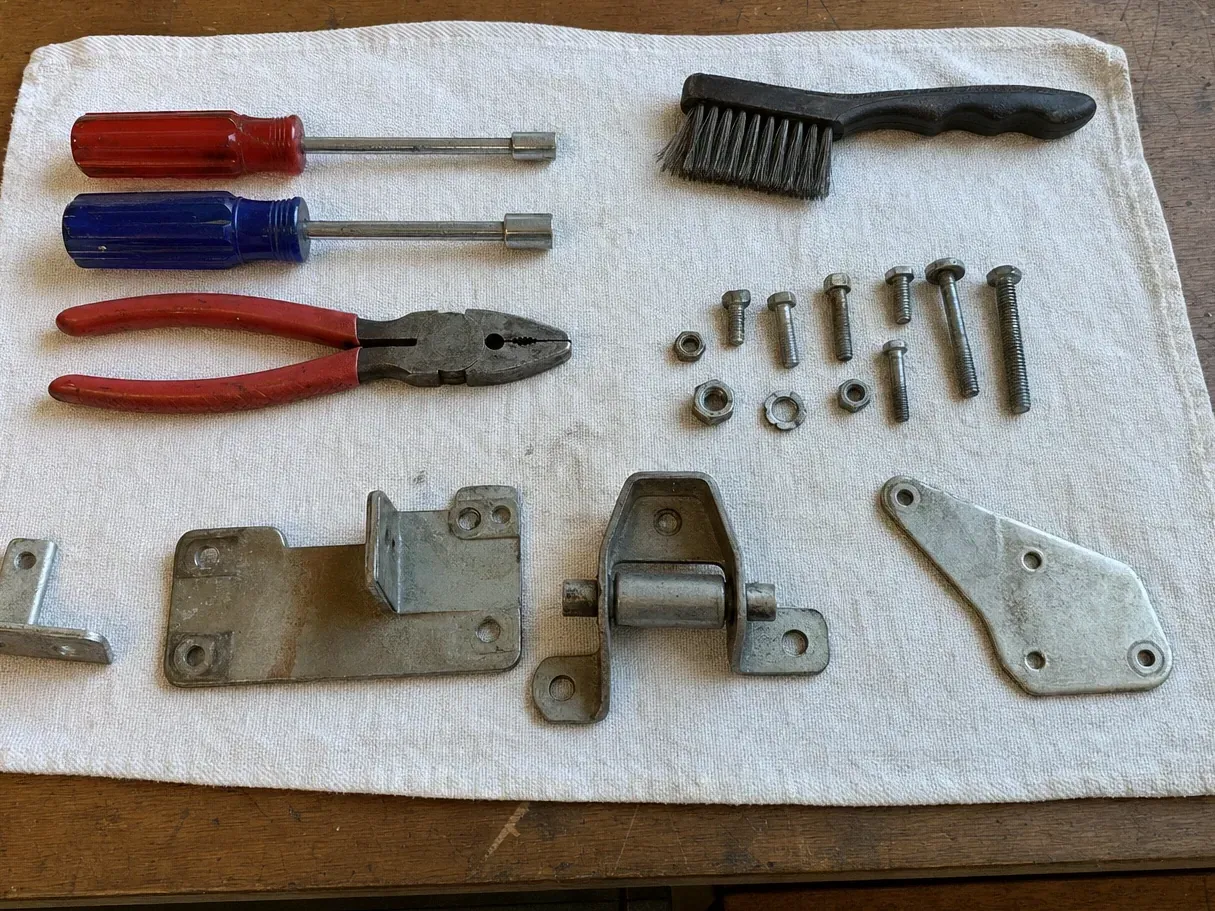
Washers around San Diego work harder than the average. A Pacific Beach rental runs several loads a day all summer, a downtown high-rise pair lives in a closet with the doors shut on it, and a Point Loma garage machine sits in salt air between uses. None of that shortens a machine on its own. What shortens them is that nobody opens the filter, nobody checks the feet, and the door gets shut on a wet drum every night.
The drain pump filter almost nobody knows is there
Nearly every front loader, and a growing number of top loaders, has a filter in front of the drain pump to catch what the drum lets through. It sits behind a small panel or flap at the bottom front corner. Most people who have owned a machine for years have never opened it.
What comes out is coins, hair clips, buttons, underwire, screws, a child's sock and a felted mat of lint and hair. When it fills, the machine drains slowly, then stops draining, then fails the spin and throws a code, and by that stage it reads like a dead pump.
- Unplug the machine and turn the water off at both taps.
- Put a shallow tray and a folded towel down. There will be more water than you expect, even after a completed cycle.
- Pull the short drain hose beside the filter first and let it empty into the tray, refitting the cap as many times as it takes.
- Unscrew the filter anticlockwise and draw it out. Rinse it under the tap and pick threads off the impeller behind it.
- Turn the impeller by hand. It should spin freely.
- Refit with the seal clean and seated, and run a rinse and spin to check for drips.
Every two months is about right, monthly on a machine running daily.
Shutting the door after a wash is what breeds the smell
A front loader is designed to hold a little water in the sump, and the rubber door boot has a fold at the bottom that traps more. Close the door on that and you have a warm, dark, damp box with soap residue in it, which is the precise recipe for the biofilm that produces the smell.
Two ingredients feed it: cold washes, which never get hot enough to break down fat and soap, and fabric softener, which is the single biggest contributor in the machines we strip. Cutting softener back changes the smell within a few weeks.
Between loads, leave the door ajar and pull the dispenser drawer out. If it is in a closet with bifold doors and the washer door cannot stay open, drape a folded towel over the latch so the door rests without catching, then close the closet.
Once a fortnight, pull the boot fold open and wipe it dry with a cloth. Most boots have two or three small drain holes at the bottom, and once those block the fold stays permanently wet. Clear them with a cotton bud.
A machine that walks is a machine not sitting flat
Spin speeds are high enough that a few millimetres of rock at one corner turns into a machine travelling across the floor and hammering the wall behind it. That hammering is what eventually kills the drum bearing, so this is a maintenance job and not a cosmetic one.
Check it properly:
- Push down on each top corner in turn, then diagonally. It should not rock at all.
- Get all four feet touching, adjust by screwing the foot in or out, then tighten the lock nut hard up against the cabinet. A loose lock nut lets the foot wind itself back out over a few weeks.
- Lay a spirit level across the top, front to back and side to side.
- Many top loaders have self-levelling rear feet: tip the machine forward about a hand's width and set it back down to reset them.
- On a wooden floor over a crawl space, or on a raised laundry pedestal, a machine that is level can still resonate. A rubber mat under the feet usually settles it.
One more, and it happens constantly in a city where people move in and out of rentals: transit bolts. A machine moved into a condo with the shipping bolts still in the back will shake violently and be damaged by it. They come out and get kept.
If the feet are right and it still walks, the shock absorbers are worn or the suspension has failed, and that is a repair rather than an adjustment.
The inlet screens behind the hoses
Where the hoses screw onto the back of the machine, each inlet valve has a small mesh screen. Its job is to keep grit out of the valve, and it does that by collecting it.
You notice it as a machine that takes far longer to fill than it used to, stalls at the fill step, or throws a long-fill or water-supply error. In older buildings around the central neighbourhoods, and after any work on a building's main, a burst of rust and grit comes through and lands straight in those screens.
- Turn both taps off and unscrew the hoses from the machine, with a towel underneath.
- Lift the screens out with needle-nose pliers. They are a push fit.
- Rinse them from the back under a running tap until they are clear.
- Push them back in flat, check the rubber washer in each hose end is soft and present, and hand-tighten with a quarter turn more.
While the hoses are off, look at their condition. Rubber hoses harden and craze with age; braided stainless is what to replace them with.
What a monthly hot cycle actually does
It is not sterilising anything, and it will not clear a blocked filter. What it does is raise the temperature of the sump, the hoses and the outer drum high enough to soften and carry away the film of fat, detergent and softener that cold washes leave behind. Run it monthly and the film never gets a grip. Skip it for a year and no single cycle will undo that.
Use the tub-clean or drum-clean programme if the machine has one, because it fills higher than a normal wash and spins between rinses. Otherwise the hottest, longest cycle available.
- Run it empty. A load of laundry soaks up the water and drops the temperature, so it does not do the same job.
- No detergent and no fabric softener.
- Use a machine-cleaning tablet or plain oxygen bleach if you want to. Do not mix cleaning products.
- When it finishes, wipe the boot fold and the door glass, which is where the loosened film ends up.
Detergent dose is the thing we change most often
High-efficiency machines wash in a very small volume of water. Overdose them and the suds cushion the load so the clothes stop tumbling against each other, the pressure sensor reads the foam and adds rinses, the cycle stretches out, and the residue that survives it feeds the smell in the boot.
San Diego water is on the hard side, which pushes people the wrong way: the wash feels less effective, so they add more, and more is exactly what causes the problem. A water-softening additive or the machine's own hardness setting, if it has one, does what the extra detergent was meant to do.
Measure to the line on the cap rather than by eye, and treat the line as a maximum for a normal load. If you are pouring liquid into the drum straight from the bottle, you are almost certainly using two or three times what the machine wants.
Hoses, valves, and what a leak reaches in a stacked unit
In a house, a burst inlet hose is a bad afternoon. In an upstairs condo or a high-rise unit it reaches the ceiling of the home below, and that becomes an insurance matter for both households.
Once a season, pull the machine forward far enough to look behind it:
- The inlet hoses should be braided, not perishing rubber, with no bulge near the fittings.
- Neither hose should be crushed or kinked against the wall. In a tight laundry closet the machine gets pushed back hard and the bend at the top of the hose takes it.
- The drain hose should sit in the standpipe to a depth the manual specifies, secured, not jammed in deep enough to siphon.
- The floor under and behind the machine should be dry, with no rust bloom or white crust at the fittings.
If you are away for more than a few days, turn both taps off. It costs nothing and it is the only measure that reliably prevents the worst version of this.
The noises that mean stop using it
Most washer noises are harmless. A few are the machine telling you that continuing will turn a repair into a replacement.
- A metallic grinding or roaring that rises with the spin and is loudest at top speed usually means the outer drum bearing. Running it on damages the drum and the seal further.
- A hard knocking or rattle only during the drain is generally an object caught at the pump impeller. Stop and open the filter.
- A burning smell, or a machine that trips its outlet or breaker, should not be run again until someone has looked at it.
- A door that will not unlock with the drum empty is usually the lock assembly rather than an emergency, but forcing it breaks the handle and the door frame.
Everything else on this page is worth doing yourself. These four are the point to stop.
What you can check yourself
- Clear the drain pump filter every two months, monthly if the machine runs daily.
- Leave the door ajar and the dispenser drawer pulled out after the last load of the day.
- Wipe the underside of the door seal fold dry and clear the small drain holes in it.
- Run one hot empty cycle a month with no detergent and no softener.
- Check all four feet sit flat with the lock nuts tightened against the cabinet.
- Rinse the inlet screens whenever the fill has slowed or the machine stalls filling.
- Look behind the machine each season for a kinked hose, a damp patch or rust at the fittings.
- Measure detergent to the line on the cap and cut fabric softener right back.
More guides